Uroflowmetry & Post-Void Residual (PVR) Urine Test
Assess the severity of urinary blockages and bladder emptying efficiency using computerized flow sensors and ultrasound.
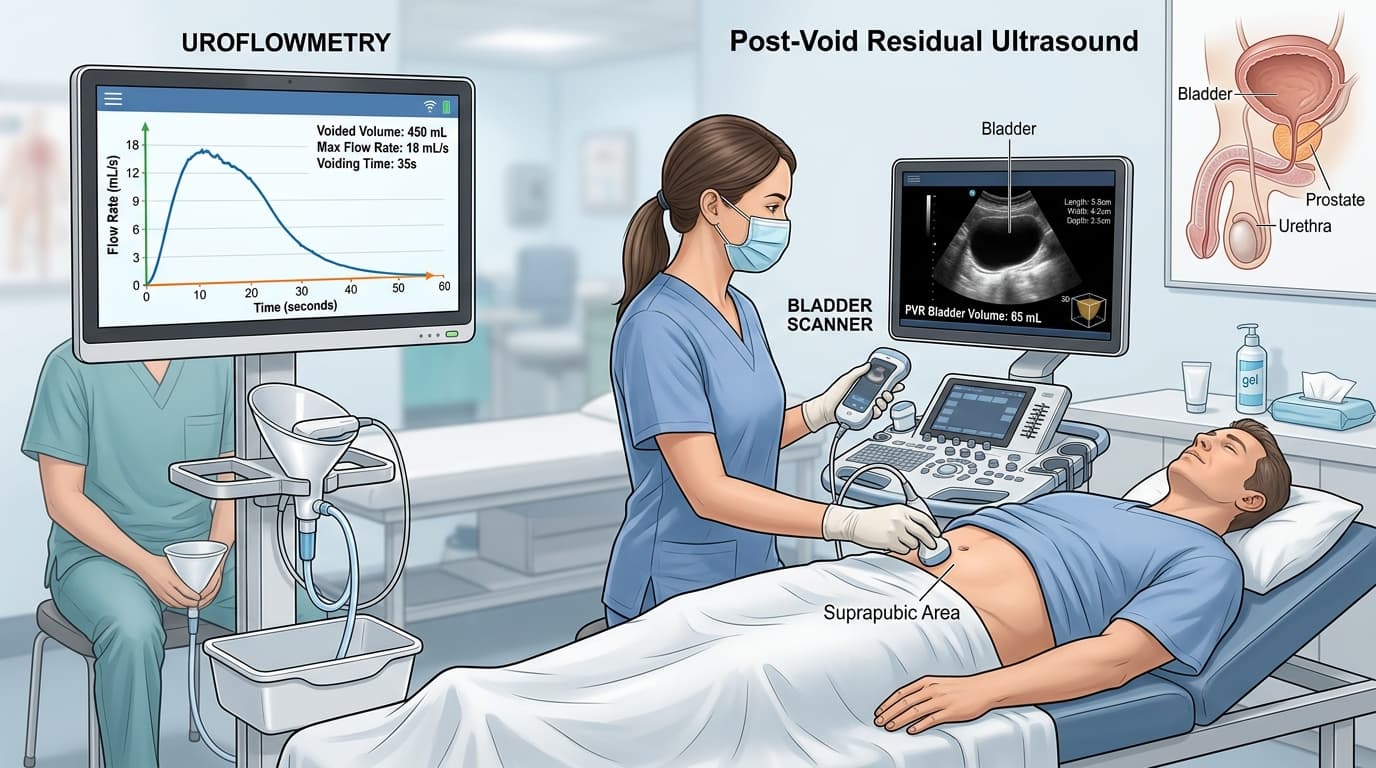
What is Uroflowmetry?
Uroflowmetry is a quick, diagnostic screening test that measures the volume of urine released, the speed of flow (in mL per second), and the time taken to urinate. You simply urinate naturally into a specialized funnel-equipped toilet. Immediately after, a quick abdominal ultrasound scan determines the Post-Void Residual (PVR) urine volume left in your bladder. This test is vital to evaluate the mechanical obstruction caused by BPH.
Key Indicators Evaluated
Maximum Flow Rate (Qmax)
A normal Qmax is above 15 mL/s. A Qmax below 10 mL/s indicates significant bladder outlet obstruction (typically due to BPH compression).
Urine Flow Curve Pattern
Analyses the shape of the voiding curve, revealing symptoms of straining, hesitancy, or intermittent flow.
Post-Void Residual (PVR) Volume
A normal PVR is less than 50 mL. A PVR exceeding 100-150 mL suggests incomplete emptying, increasing the risk of UTIs and bladder stones.
Patient Preparation Guide
Drink 2 to 3 glasses of water (about 500-1000 mL) 1-2 hours before the test so your bladder is comfortably full.
Avoid urinating right before the test. A minimum voiding volume of 150 mL is required for an accurate reading.
Relax and urinate normally during the test without straining or pushing excessively.
Related Topics
Clinical References & Sources
- American Urological Association (AUA) Guidelines on Prostate Cancer Early Detection.
- European Association of Urology (EAU) Guidelines on Prostate Cancer Screening.
- National Comprehensive Cancer Network (NCCN) Guidelines for Prostate Cancer Early Detection.