Prostatitis Diagnosis & Treatment

Medical Review & Verification: Dr. Niti Navanimitkul, M.D.
Board-Certified Urological Surgeon | Specialist in Complex Prostate Inflammatory Conditions | M-Trust Urology Clinic
Last Reviewed: July 2026A comprehensive clinical guide to managing acute, chronic, and Chronic Pelvic Pain Syndrome (CPPS) according to NIDDK international standards.
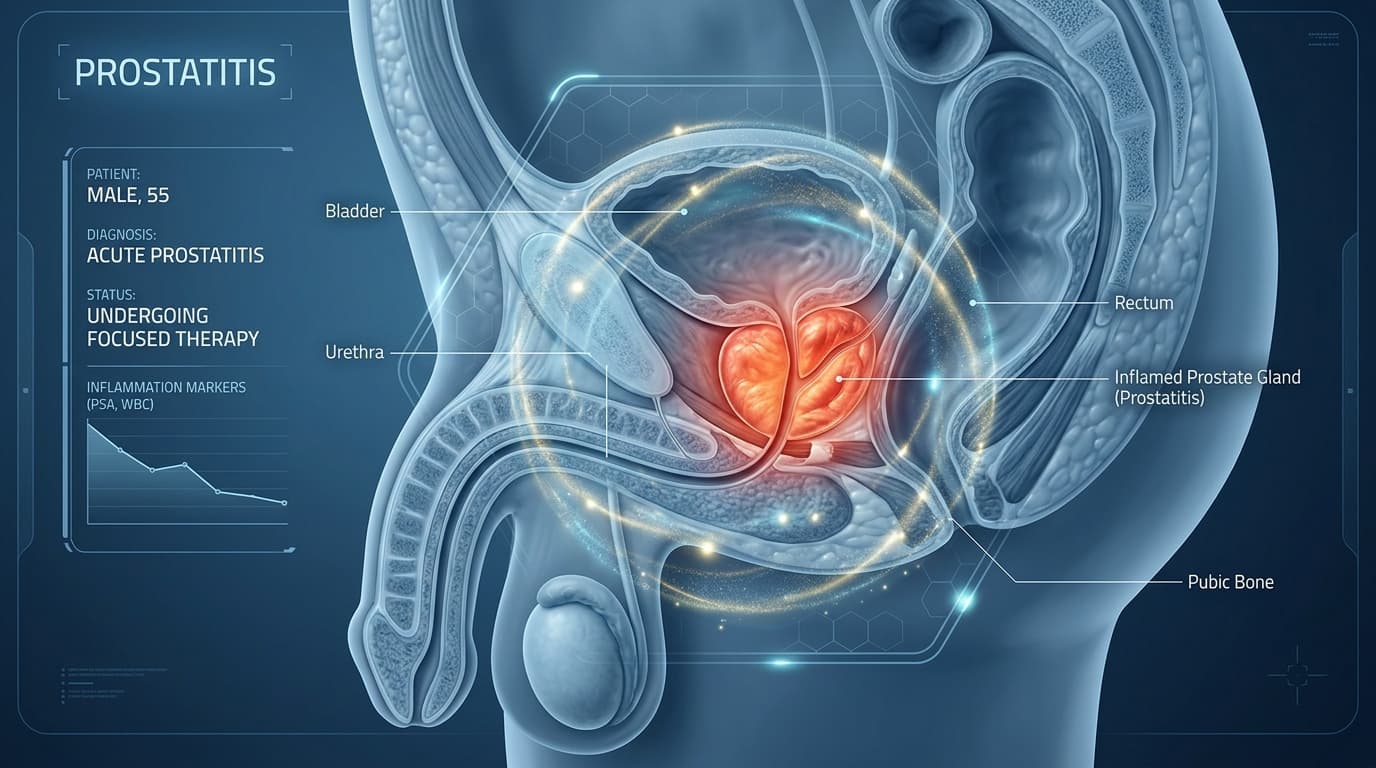
What is Prostatitis?
Prostatitis is an inflammation or infection of the prostate gland. Unlike Benign Prostatic Hyperplasia (BPH) or prostate cancer, which primarily affect older men, prostatitis can occur in men of all ages, from young adulthood through old age. It is characterized by pelvic pain (perineal, scrotal, penile, or lower abdominal), difficulty urinating, painful ejaculation, or blood in semen [1].
The National Institute of Diabetes and Digestive and Kidney Diseases (NIDDK) classifies prostatitis into four distinct categories. Accurate diagnosis is essential because the treatment pathways differ significantly—ranging from urgent intravenous antibiotics for acute bacterial infections to pelvic floor physical therapy and neuropathic pain management for chronic non-bacterial pain [2].
NIDDK Prostatitis Classifications
Understanding the signs, laboratory indicators, and pathology of each category [3]:
Analyzing Symptoms and Treatments for Each Category
Category I: Acute Bacterial Prostatitis
A severe, sudden-onset bacterial infection of the prostate. - **Symptoms:** High fever, chills, severe burning during urination, urinary urgency, and acute urinary retention. - **Treatment:** Requires immediate high-dose antibiotic therapy (often IV in a hospital setting initially, transitioning to oral antibiotics for 2-4 weeks) to prevent bloodstream infection (sepsis) [4].
Category II: Chronic Bacterial Prostatitis
Recurrent bacterial infections of the prostate lasting longer than 3 months. - **Symptoms:** Intermittent mild-to-moderate urinary burning, pelvic discomfort, and recurrent urinary tract infections (UTIs) with the same bacterial strain. - **Treatment:** Long-term oral antibiotic therapy (typically for 4 to 12 weeks) combined with alpha-blockers to improve urine flow [5].
Category III: Chronic Pelvic Pain Syndrome (CPPS)
The most common form, accounting for over 90% of prostatitis cases, with no bacteria detectable in standard cultures. - **Symptoms:** Chronic pelvic pain, perineal pressure, pain during or after ejaculation, and lower urinary tract symptoms (LUTS) for at least 3 months. - **Treatment:** Multimodal therapy focusing on symptom relief, including anti-inflammatory medications (NSAIDs), alpha-blockers, pelvic floor muscle relaxants, and Pelvic Floor Physical Therapy [6].
Category IV: Asymptomatic Inflammatory Prostatitis
Inflammation of the prostate without any clinical symptoms. - **Symptoms:** Typically diagnosed incidentally during infertility evaluations (white blood cells in semen) or workups for elevated PSA levels. - **Treatment:** Generally does not require treatment unless the patient is undergoing urological surgery or experiencing fertility issues [7].
Diagnostic Procedures
Specialized clinical testing is required to isolate the correct prostatitis category [8]:
1. Meares-Stamey 4-Glass Test
Collecting initial urine, midstream urine, expressed prostatic secretions (EPS) during massage, and post-massage urine. Samples are analyzed for white blood cells and bacteria to localize the site of infection.
2. Digital Rectal Examination (DRE)
A clinical rectal palpation to assess prostate tenderness, size, and texture, and rule out prostatic abscess.
3. Transrectal Ultrasound (TRUS)
Evaluates post-void residual urine volume and checks the internal structure of the prostate for inflammation patterns or calcifications.
Lifestyle & Self-Care Modifications
Behavioral adjustments play a crucial role in reducing pelvic pressure and pelvic floor muscle spasms [9]:
1. Avoid Perineal Pressure
Avoid cycling, horseback riding, or prolonged sitting on hard surfaces. Use a doughnut-shaped cushion to relieve pressure on the prostate.
2. Warm Sitz Baths
Sitting in warm water for 15-20 minutes daily relaxes the pelvic floor muscles and increases local blood flow to promote healing.
3. Dietary Changes
Eliminate alcohol, heavy caffeine, and highly spicy foods, which irritate the urinary tract and aggravate pelvic pain.
Comparison of Key Prostatitis Subtypes
An academic overview contrasting clinical presentation and management [10]:
Clinical Efficacy & Options Overview
⊕ ข้อดี (Pros)
- ✓Targeted antibiotic therapy resolves up to 90% of bacterial infections.
- ✓Alpha-blockers relax the prostate capsule, significantly improving voiding symptoms.
- ✓Pelvic floor physical therapy targets muscular spasms, resolving chronic pain in CPPS.
- ✓Multimodal clinical strategies effectively restore normal quality of life.
⊖ ข้อจำกัด (Cons)
- ✗Chronic CPPS can be challenging to cure completely and may flare up during times of stress.
- ✗Managing chronic pelvic pain requires patient patience and active lifestyle modifications.
- ✗Prolonged antibiotic courses carry risks of gastrointestinal disruption and resistance.
Who Should Seek Prostatitis Evaluation?
Schedule an evaluation if you experience any of these warnings [11]:
- ▹Unexplained Pelvic Pain: Persistent pain or pressure in the perineum, scrotum, penis, or lower abdomen.
- ▹Urinary Discomfort: Burning during urination, frequent voiding, or feeling that the bladder never empties.
- ▹Painful Ejaculation: Pain or throbbing during or after ejaculation, or blood observed in semen.
- ▹Recurrent UTIs: Recurring urinary infections with fever or cloudy, foul-smelling urine.
Clinical Efficacy and Cure Rates
Cure and improvement statistics observed with modern multidisciplinary care [12]:
Acute Cure Rate
Excellent resolution of symptoms with timely, guideline-based antibiotic therapy.
CPPS Improvement
Significant pain reduction achieved via combined medications and physical therapy.
Abscess Formation
Early diagnostic screening prevents localized prostatic abscess development.
Post-Treatment surveillance
Monitoring to ensure eradication of infection and check flow dynamics [13]:
- •Post-treatment Urine Culture: Performed after completing antibiotics to confirm bacterial clearance.
- •Uroflowmetry Test: Checked if urinary flow remains weak to rule out urethral strictures from inflammation.
- •NIH-CPSI Score Follow-ups: Regular tracking of pain indexes to guide step-down drug management.
Preventing Prostatitis Recurrences
Long-term habits to maintain a healthy prostate and urinary tract [14]:
- •Hydration: Drink 2 to 3 liters of water daily to flush bacteria from the urethra.
- •Post-coital Hygiene: Void and clean the genital area after sexual activity to prevent retrograde bacterial entry.
- •Avoid Urinary Retention: Do not hold urine for long periods; empty your bladder regularly to prevent fluid backflow.
- •Manage Stress: Stress triggers pelvic floor tension, which directly worsens non-bacterial prostatitis (CPPS) symptoms.
Related Topics
Academic References & Medical Literature
- Krieger JN, et al. 'National Institutes of Health Classification of Prostatitis.' JAMA, 1999; 282(3):236-237. doi:10.1001/jama.282.3.236.
- Nickel JC, et al. 'Clinical Evaluation of Prostatitis: Standard Diagnostics and Beyond.' BJU International, 2010; 106(6b):884-889. doi:10.1111/j.1464-410X.2010.09635.x.
- Engeler GP, et al. 'EAU Guidelines on Chronic Pelvic Pain.' European Association of Urology Guidelines, 2024.